Harbor Scene - 1920x1270

5. The Digital Product Passport is coming in 2027

Starting February 18, 2027, the Digital Product Passport (DPP) will become mandatory for industrial batteries (over 2 kWh), as well as electric vehicle (EV) and light-duty vehicle batteries. It forms the backbone of a redefined, digital supply chain.

For all stakeholders in the economic cycle—from production to recycling—this means there is an immediate need for action.

What exactly is the Digital Product Passport?

As a key instrument of the EU Ecodesign Regulation (ESPR—Ecodesign for Sustainable Products Regulation) , the Digital Product Passport (DPP) consolidates all product metrics across the entire value chain. A physically affixed code (such as a QR code) provides direct access to transparent information on material origin, carbon footprint, and maintenance and recycling potential. To achieve this, all participants in the economic cycle require complete, traceable, and standardized information throughout the entire value chain.

As key hubs in the global exchange of goods, ports and terminals also have a responsibility to capture DPP data directly at the transshipment point, synchronize physical goods with their digital profiles, and provide regulatory documentation transparently throughout the supply chain.

The 5 Major Challenges of the DPP

A digital product passport requires hundreds of data points across the entire product lifecycle (e.g., product carbon footprint, material origin, serial numbers, supplier certificates). Without automated data integration, there is a risk of manual Excel chaos, incomplete audits, and significant delays in day-to-day operations.

This presents many companies with five key challenges:
data-server

Breaking Down Isolated Data Silos:

Key environmental, emissions, and supplier data are stored in isolation across various corporate, warehouse, and accounting systems.
scalability

Fixing Format Chaos:

Each source system uses its own data formats and interfaces. Without translation, the systems cannot communicate directly with one another.
communication

Establish missing supplier connections:

DPP certifications require data covering the entire global value chain.
digital

Resolving Performance Bottlenecks When Scaling:

When high transaction volumes occur at the batch or production run level, standard interfaces reach their limits.
convert-data

Avoiding Inadequate Data Governance:

Unaudited data jeopardizes the auditability of the Digital Product Passport.

What are the implications of the DPP for your IT, hardware, and compliance?

1. IT and Data Integration

Terminal Operating Systems (TOS), automated gate systems, and track-and-trace solutions must be able to seamlessly capture and process DPP data.

At the same time, real-time data exchange via standardized interfaces with shipping lines, shippers, and regulatory authorities is becoming increasingly important for preventing delays in cargo handling.

Our integration platform, edbic, acts as a flexible layer here: It seamlessly connects all these different data silos—without requiring any costly modifications to your existing systems.

Fotolia_137771475_LUrheber_Nuamfolio_optimiert
2. Equipment and Hardware

In the future, scanners, mobile terminals, and IoT sensors must reliably capture and process QR codes and other digital identifiers directly on the cargo carrier.

Building on this, automated gate processes should also be expanded to incorporate DPP information directly into the workflow without manual intermediate steps, ensuring seamless processing.

edbic handles the real-time processing of these hardware signals: The platform directly captures data from all scanning devices and forwards it without delay—ensuring that your gate throughput remains as fast and congestion-free as ever.

AdobeStock_124242391 small
3. Compliance and Transparency

Documentation regarding battery type, origin, sustainability data, and recycling information is also becoming increasingly important during transport and temporary storage.

All parties involved in the entire economic cycle must keep this information readily available at all times, as end-to-end traceability throughout the entire supply chain is becoming a critical criterion for audits, customs clearance, and customer requirements.

This is where the synergy between edbic and AEP Solution4 comes into play: While edbic automatically collects and secures all supporting data, Solution4 uses it to generate complete, legally compliant product passports in no time—ready for any audit or customs inspection.

Fotolia_94538680_L_Author_stockphoto mania
AEP_compacer_1080x720_2

The Solution – The Dual Principle:

The answer, therefore, lies in an intelligent dual architecture that seamlessly integrates data integration and compliance logic:

1. compacer edbic acts as the central nervous system, automatically collecting, consolidating, and pre-validating your data from all source systems.

2. AEP Solution4 serves as the ESG ( Environmental, Social, and Governance)“brain ,” applying regulatory logic to generate the final, audit-ready product passport.

Solution4 and edbic are already natively linked, so all that remains is to integrate your IT infrastructure with them.

edbicMockup

edbic – The Central Nervous System for Your Product Data

compacer edbic handles the automated capture, transformation, and delivery of all product-related data across your entire value chain.

As a flexible integration platform, edbic connects distributed data from merchandise management, product, and supplier systems, breaks down data silos, and converts all information into a uniform format.

Before the data is processed further, edbic also checks it for completeness and plausibility. This ensures that only verified and structured raw data is transferred to the DPP’s logic layer.

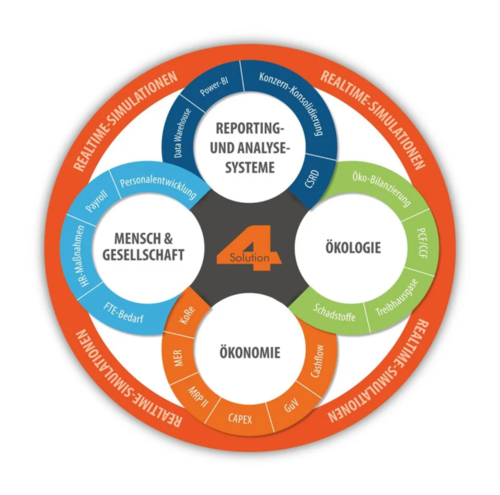
AEP_Solution4

AEP Solution4 – The ESG Brain for the Audit-Ready Product Passport

AEP Solution4 handles the regulatory assessment of the data processed by edbic. The software applies the specific requirements of the EU Ecodesign Regulation (ESPR) as well as industry-specific ESG regulations, calculates the required metrics (such as the carbon footprint), and links them to the necessary certificates.

Using the processed information, Solution4 generates a standards-compliant, tamper-proof Digital Product Passport that includes all required access rights for customers, regulatory agencies, and recycling partners.

The result is a fully traceable document that can be audited quickly.

Not just a chore:The DPP Creates Added Value
Beyond mere compliance, this transformation also opens up strategic opportunities: In the future, terminals will be able to establish data-driven value-added services—such as active DPP data management or specialized compliance services for their customers.

In this way, regulatory pressure is directly transformed into new, profitable business models and genuine customer loyalty.
Fotolia_79955985_L_Copyright_industrial_view_optimized
Miguel Johnson—Business Development & Strategic Sales—compacer-4-3

Get your personalized quote

My name is Miguel Johnson, Head of Business Development & Strategic Sales at compacer. Let’s work together to find out how you can use our digital transformation models to overcome existing process barriers.

Get in touch with us today—I look forward to working with you to set the right course for your growth.

Get in touch now!