group_promotional IT Strategy

Smart Port Operations: How a Digital Twin Helps Save Energy

The implementation of the compacer edbic platform as a central data hub enabled the creation of a digital twin for energy management in port operations. By intelligently linking sensor data with existing IT systems, previously untapped energy resources are made transparent, leading to precise consumption forecasts, reduced CO₂ emissions, and significant time and cost savings.
Learn More
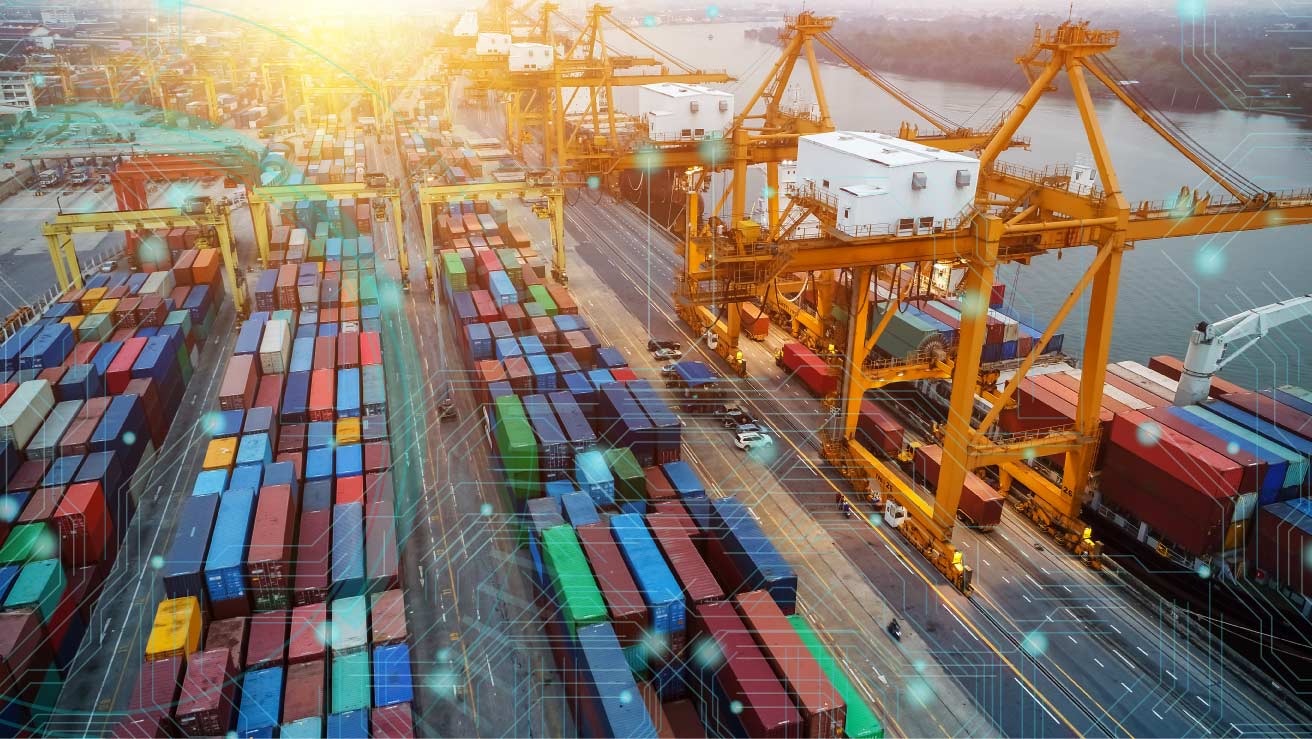
Header Image - Port Automation

Implementing a Sustainable IT Strategy in Port Operations with edbic and the Digital Twin

By using compacer edbic as a central data hub, the port operator is able to intelligently integrate sensor data and complex IT systems to enable resource-efficient energy management. In addition, the port uses an AI-powered digital twin to maintain a precise overview of energy demand and generation, and, through accurate forecasts, sets the course for a sustainable and low-carbon future.

Payback Period+

Thanks to edbic and the Digital Twin, sustainable energy management was successfully implemented in a very short time and with an outstanding cost-benefit ratio. Comprehensive transparency into electricity demand and energy generation through the AI-powered data hub edbic. Significantly accelerated implementation and effortless scalability to additional container terminals.

Improved Data+

Data collection from power meter sensors, inventory data for older container cranes, and other port components. Enrichment, conversion to a standardized meta-format, and correlation of sensor data with AI-based consumption forecasts. Distribution to downstream systems such as TOS, PCS, or SAP via edbic as a central data hub.

Transparency+

Near-real-time data exchange on energy demand, power generation, and system status in port operations. Monitoring of energy flows and utilization rates for predictive control and AI-powered consumption forecasts. Greater transparency through open standards and the edbic meta-format, rather than error-prone in-house developments.

The Challenge

The reorganization and relocation of two 1,400-metric-ton container gantry cranes from northern Germany to a partner port in Estonia provided a unique opportunity to rethink digital transformation in port operations. Increasing energy efficiency, reducing CO₂ emissions, and lowering operating costs became key objectives in this process.

With this goal in mind, the aim was to meet the growing demands for sustainability and environmental protection in the face of international competition while simultaneously providing a future-proof, resource-efficient infrastructure.

The most important factors in this process were the reuse of existing hardware (retrofitting) and a clear commitment to maximum sustainability. The existing infrastructure of the approximately 20-year-old container gantry cranes had grown over the years and consisted of a multitude of individual parts and components from different manufacturers, resulting in an outdated level of digitization. This led to a lack of visibility into data regarding electricity consumption and generation during loading and unloading operations.

Without centralized integration, valuable energy was lost unused;for example, electricity generated during the unloading process was simply released into the air as heat. It became clear that connecting the physical components to modern IoT sensors and suitable software tools would create immediate added value and comprehensive data transparency.

In addition to the “traditional” challenges of integration projects, the customer emphasized that the integration of IoT sensors (power meters) as well as future connectivity to existing systems such as the Terminal Operating System (TOS), Port Community System (PCS), or SAP was very important to them. A flexible integration platform that functions as an open data hub and provides the foundation for an AI-powered digital twin was therefore the key to sustainable success.

The Solution

The port operator decided to use compacer edbic as its central data hub. The integration platform serves as the technical backbone for consolidating heterogeneous plant data and forms the foundation for building a digital twin.

An innovative integration concept was implemented in a very short time. Instead of relying on rigid in-house developments, data from various sources is collected, consolidated, and translated into a uniform meta-format via edbic. This allows the solution to integrate seamlessly into the existing software landscape, such as the Terminal Operating System (TOS), Port Community System (PCS), or SAP.

However, the port operator took a decisive step further and leveraged the commissioning of the relocated container cranes for its pioneering IoT and sustainability project. For the project, newly installed power meters were connected via edbic to reveal hidden data on power consumption and energy generation in real time. The collected data feeds the Digital Twin, where it is available for analysis and control.

The solution is complemented by AI-powered forecasting software. In combination with data from other systems and cloud services, the system is able to predict electricity consumption one week in advance with an accuracy of 96–98%. Energy recovered during the unloading process is no longer wasted as heat but is specifically stored and made available, for example, for the charging infrastructure of autonomous guided vehicles (AGVs).

In addition, the setup lays the foundation for future predictive maintenance scenarios. Through the planned integration of additional sensors—such as those for monitoring cable length and cable quality—outages and downtime of container cranes can be proactively avoided.

This new level of digitalization simplifies day-to-day port management, significantly reduces operating costs, and paves the way for CO₂-neutral terminal operations.

Result

With the introduction of edbic and the digital twin, it is now possible for the first time to centrally consolidate all sensor data relevant to energy management and exchange it with existing IT systems such as TOS, PCS, or SAP as part of a seamless, transparent process. The process operates independently of the number of port components in operation and can be easily scaled. All energy flows are fully traceable. In addition, the port operator is provided with precise AI forecasts for electricity consumption, enabling proactive energy use and significant CO₂ savings across the entire port operation.

See how our support has helped these companies

“With edbic, we were suddenly able to offer services before our customers had even asked for them. Now, proactively developing new services has become second nature. Something like that would not have been possible in the past.”

Tim Pieters

IT Systems Engineer, AET
“I’m just as enthusiastic about working with compacer as I am about their products. Above all, they’re impressively creative when it comes to finding solutions, and their flexibility and dedication are equally remarkable. With compacer, I know I have a reliable partner by my side, and that gives me peace of mind.”

Dominic Küchler

Head of IT, Cuxport GmbH

Read the full success story

Find the case study and the PDF containing the full success story of the Digital Twin and compacer.
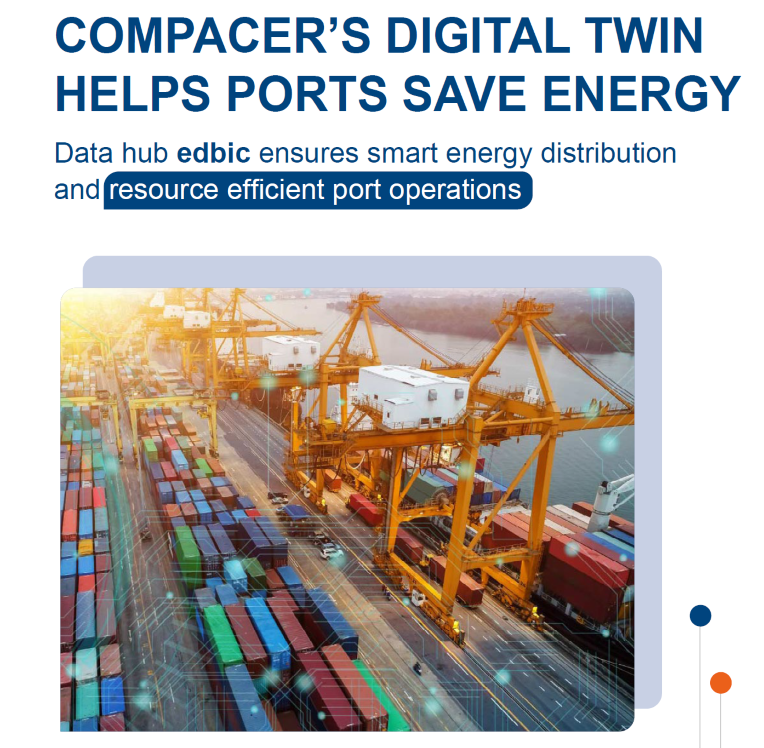
Digital_Twin_Deckblatt_EN_geschnitten Case Study
Success Story – Digital Twin Helps Port Save Energy

Digital twins and CO₂-neutral approaches can be used to optimize the loading and unloading processes of cargo ships and container ships. However, this is only the beginning of a long-term shift toward a more energy-efficient logistics industry.

Read more
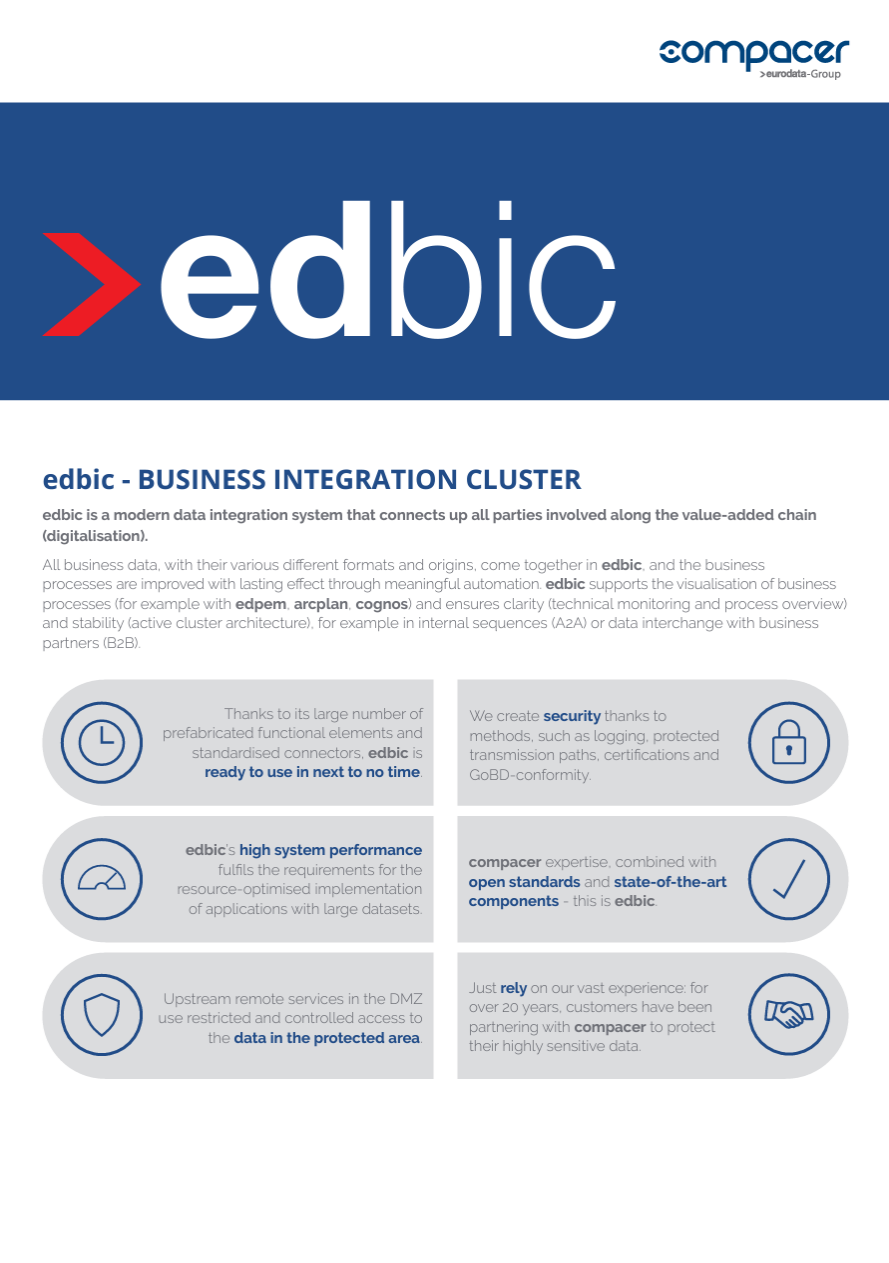
Deckblatt edbic Datenblatt EN Data Sheet
edbic – Business Integration Cluster

edbic is a modern data integration system that connects all stakeholders within the value chain (digitization).

Read more
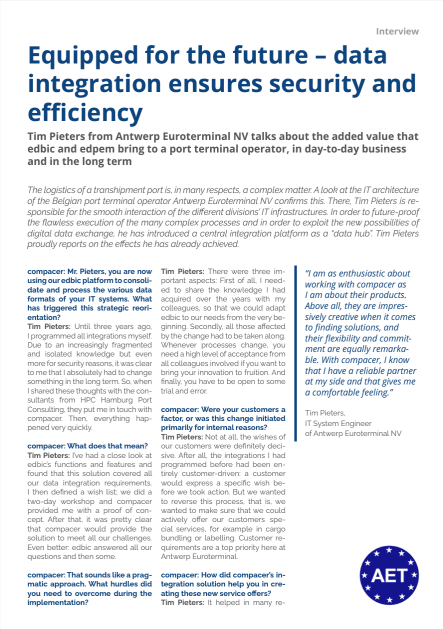
Interview Pieters AET Deckblatt EN White Paper
Interview: Data Integration for Security and Efficiency

Tim Pieters of Antwerp Euroterminal NV explains the added value that edbic and edpem bring to a port terminal operator—both in day-to-day operations and in the long term

Read more
Deckblatt Predivictive Maintenance EN White Paper
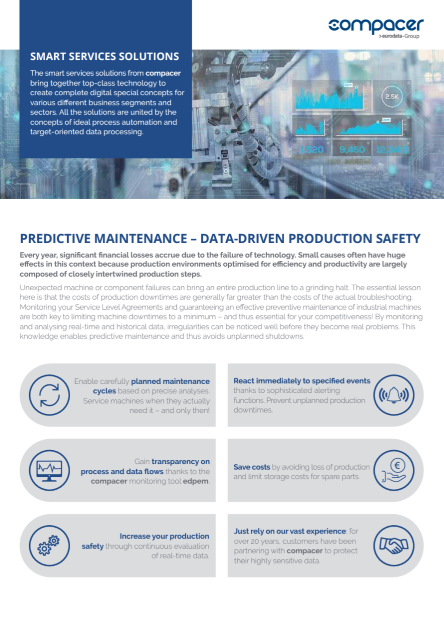
Predictive Maintenance – Data-Driven Production Reliability

In a manufacturing process focused on efficiency and productivity, the individual production steps are closely interlinked. The sudden, unexpected failure of a machine or component can bring the entire production line to a standstill.

Read more
AET Erfolgsstory Deckblatt EN Whitepaper
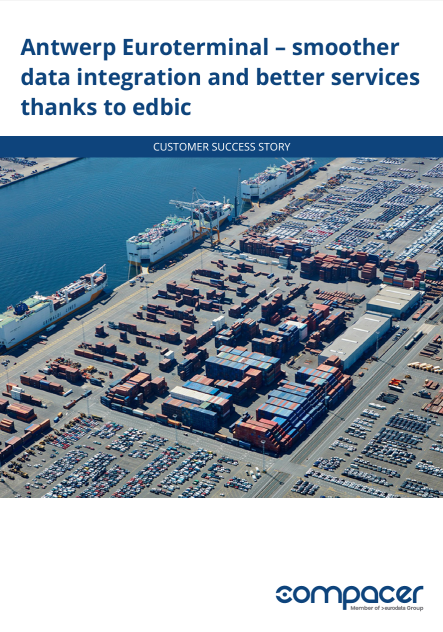
Success story - Antwerp Euroterminal

Antwerp Euroterminal - easier data integration and better services thanks to edbic. The implementation of a new Terminal Operating System (TOS) environment was a one-off...

Read more
Miguel Johnson—Business Development & Strategic Sales—compacer-4-3

Our experts will help you move your project forward

Are you also considering connecting the old world with the new through an IT integration project?

Get in touch with us!